| Brand Name: | HongCe |
| Model Number: | HC-MTB300 |
| MOQ: | 1 Set |
| Price: | Negotiation |
| Payment Terms: | L/C,T/T |
| Supply Ability: | 3 Sets per 1 months |
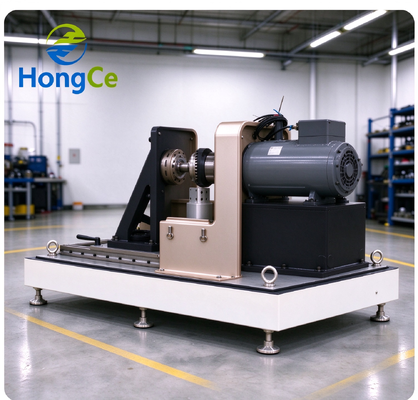
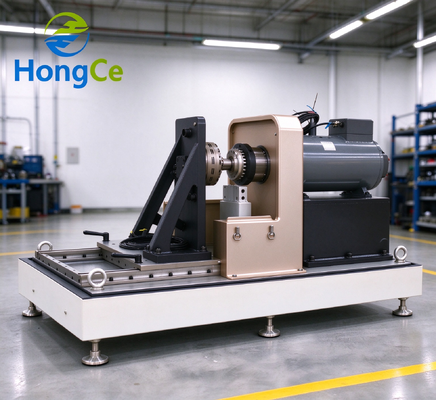
The in-wheel motor dynamometer test bench is specifically designed for the performance evaluation of electric in-wheel motors, providing a comprehensive testing solution to measure motor operating characteristics under various conditions. The system enables the assessment of key performance indicators—such as torque, rotational speed, electrical input, mechanical output, and efficiency—helping manufacturers evaluate product quality, verify design performance, and ensure production consistency.
This EV motor test bench can be flexibly configured to accommodate different in-wheel motor specifications, testing requirements, and production application scenarios. Whether utilized in an R&D laboratory or for quality inspection during production, it serves as a practical platform for capturing reliable test data and conducting thorough evaluations of motor performance.
A hub motor dynamometer test bench is a specialized testing system designed to evaluate the mechanical and electrical performance of electric hub motors.
Unlike traditional drive motors that transmit power via an external transmission system, hub motors have their drive components integrated directly into the wheel assembly. Consequently, testing protocols for these motors must account for specific factors such as their mounting structure, connection interfaces, rotational characteristics, and operational loads.
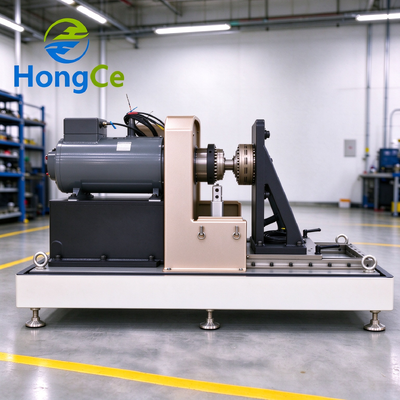
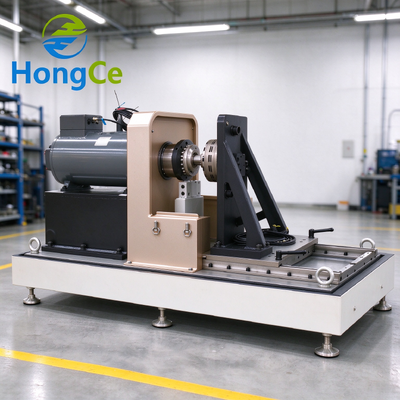
The HC-MTB300 hub motor performance test bench is designed to meet these testing requirements. It integrates a motor mounting fixture, a loading system, measuring instruments, and control software, and can be configured to provide a comprehensive assessment of a hub motor's operational performance.
Depending on the selected configuration, testing can cover:
For manufacturers, the data obtained from these measurements serves as a valuable reference throughout the processes of product R&D, design verification, production inspection, and quality improvement.
| Standard | Relevant Clauses | Technical Reference |
|---|---|---|
| IEC 60034-1 | Clause 5: Ratings; Clause 6: Operating conditions; Clause 8: Performance | General requirements and operating characteristics of rotating electrical machines |
| IEC 60034-2-1 | Clauses 4–6: Measurement methods and efficiency determination | Methods for determining losses and efficiency from tests |
| IEC 60034-2-3 | Relevant test procedures for converter-fed AC motors | Specific test methods for determining losses of converter-fed AC motors |
| ISO 21782-1:2019 | Clause 5: Test conditions | General test conditions for electric propulsion components |
| ISO 21782-3:2019 | Clause 5.1: Motor tests; 5.1.1: Loss and efficiency; 5.1.2: Temperature rise; 5.1.3: Torque characteristics; 5.1.4: Cogging torque | Performance testing of EV motors and inverters |
| ISO 21782-5:2021 | Clause 5: Operating load test procedures | Operating load and endurance evaluation of electric propulsion systems |
| ISO 21782-6:2019 | Clause 4: Motor operating endurance tests | Motor endurance testing under defined operating conditions |
| Item | Technical Parameters |
|---|---|
| Dynamometer Type | AC Regenerative Dynamometer |
| Operating Mode | Four-Quadrant Operation (Bidirectional Drive and Loading) |
| Rated Power | 120 kW |
| Peak Power | 180 kW |
| Rated Torque | 600 N·m |
| Peak Torque | 1,200 N·m (0–300 r/min) |
| Maximum Test Speed | 2,000 r/min (Upgradeable to 3,000 r/min) |
| Torque Measurement Accuracy | ±0.2% FS (Steady-State); ±0.5% FS (Dynamic) |
| Speed Measurement Accuracy | ±1 r/min |
| Torque Sampling Frequency | ≥1 kHz (Optional 10 kHz) |
| Rotational Inertia Simulation | 0.1–100 kg·m² (Electronic Inertia Simulation) |
| Energy Regeneration Efficiency | ≥92% (Electrical Energy Fed Back to Factory Internal Power Grid) |
| Loading Modes | Constant Torque, Constant Speed, Constant Power, Road-Condition Tracking, Customized Profiles |
| Cooling Medium | Water Cooling |
| Cooling Circuit | Independent Water Circuits for Motor Stator and Controller |
| Temperature Control Range | 20–85°C |
| Temperature Control Accuracy | ±1°C |
| Flow Rate Adjustment | 0–30 L/min |
| Flow Control Method | Independent Closed-Loop Flow Control |
| Temperature Acquisition Channels | 16-Channel PT100 |
| Temperature Monitoring Points | Motor Windings, Bearings, Housing and IGBT |
| Environmental Chamber | Optional |
| Environmental Temperature Range | -40°C to +120°C |
Our proprietary direct-coupling torque transmission design eliminates coupling backlash and torsional windup, delivering superior measurement accuracy at low speeds — the critical operating region for hub motor validation. This technology ensures true torque readings even at near-zero rpm launch conditions.
The self-tuning control algorithm automatically optimizes control parameters based on the inertia and electrical characteristics of the test specimen, ensuring stable operation across a wide range of motor sizes and types without manual gain adjustment.
The bidirectional DC bus architecture enables energy recovery during loading and braking tests to be fed back into the facility power grid. This not only reduces operational costs but also minimizes heat generation, creating a cleaner and safer laboratory environment.
Built-in test data management system automatically generates standardized test reports, stores historical test data, and supports data export in multiple formats. Advanced analysis tools include efficiency contour plotting, loss breakdown analysis, and thermal performance trending.
The system's modular design allows for field upgrades as testing requirements evolve. Dynamometer capacity, voltage range, and measurement channels can all be expanded without replacing the entire system, protecting your long-term investment.
A hub motor dynamometer is used to evaluate the mechanical and electrical performance of electric hub motors. Depending on its configuration, it can measure torque, speed, power, efficiency and temperature under different operating conditions.
The test bench can be configured for different electric hub motors, including BLDC hub motors, permanent magnet synchronous hub motors, geared hub motors and direct-drive hub motors. Compatibility depends on motor dimensions, mechanical interfaces and operating specifications.
Yes. Simultaneous torque and speed measurement is a fundamental requirement for determining mechanical output power. The actual measurement ranges and accuracy depend on the selected sensors and system configuration.
The system can be configured to collect torque and speed data at multiple operating points and generate a torque-speed characteristic curve through its measurement and software functions.
Yes. Motor efficiency can be evaluated by measuring electrical input power and mechanical output power under corresponding test conditions.
Guangzhou HongCe Equipment Co., Ltd. is a professional manufacturer specializing in the research, development, and production of precision testing equipment for electric motors, automotive components, and electrical products. With our own in-house design team, advanced machining workshop, and strict quality control system, we deliver reliable testing solutions that meet international standards.
Our product portfolio spans motor test benches, IP waterproof testing equipment, endurance cycling testers, and various cable and wire testing instruments — serving customers in automotive, home appliance, aerospace, and third-party testing industries worldwide.
We take pride in our factory-direct business model, which means every piece of equipment is designed, built, and supported by the same team. This vertical integration ensures consistent quality, faster response times, and genuine value for our customers.