logo

products details

Created with Pixso. Home Created with Pixso. Products Created with Pixso.
Motor Test Bench
Created with Pixso.

Three Phase Asynchronous Motor Test Bench for Torque, Speed and Efficiency Performance Testing

Three Phase Asynchronous Motor Test Bench for Torque, Speed and Efficiency Performance Testing

Brand Name: HongCe
Model Number: HC-MTB100
MOQ: 1 Set
Price: Negotiation
Payment Terms: L/C,T/T
Supply Ability: 5 set per 1 months
Detail Information
Place of Origin:
Guangdong, China
Certification:
Third-party certification certificate(cost additional)
Motor Power Range:
100 W - 3 MW
Test Voltage Range:
0-3300 V
Speed Range:
0-12000 Rpm
Voltage Accuracy:
±(0.01% Of Reading + 0.03% Of Range)
Current Accuracy:
±(0.01% Of Reading + 0.03% Of Range)
Power Accuracy:
±0.03%
Speed Accuracy:
±1 R/min
Torque Accuracy:
±0.05% F.S.
Packaging Details:
Plywood
Highlight:

three phase asynchronous motor test bench

,

torque speed efficiency performance testing

,

IEC motor test equipment

Product Description
Product Overview

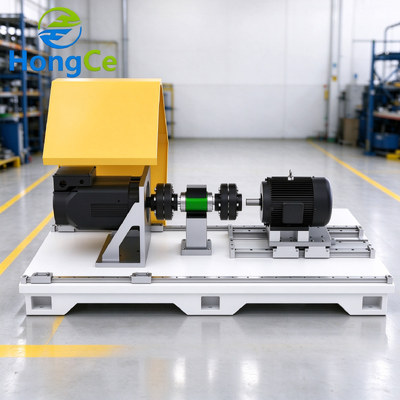
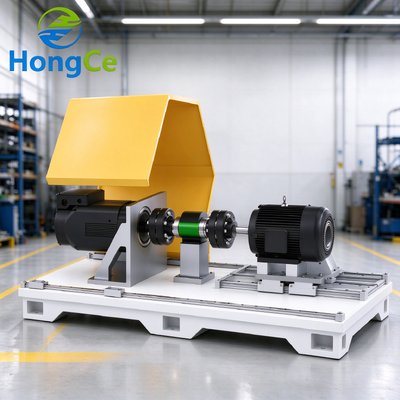
The Three Phase Asynchronous Motor Testing System is designed to evaluate the operating performance and mechanical characteristics of three-phase induction motors under different working conditions. By combining electrical measurement, torque and speed detection, and controlled load testing, the system helps manufacturers obtain essential performance data for motor development, production inspection and quality evaluation.

Developed and manufactured by HongCe, this electric motor test bench can be configured according to motor power, rated speed, torque range and customer testing requirements. From individual performance measurements to comprehensive dynamometer testing, we provide customized engineering solutions backed by our own R&D and manufacturing capabilities.

Product Introduction

A motor's real performance cannot be judged by its appearance or rated specifications alone. Its operating characteristics under different loads, speeds and working conditions are equally important. For manufacturers of three-phase asynchronous motors, reliable performance testing helps identify variations in motor characteristics, verify product specifications and maintain consistent manufacturing quality.

The Three Phase Asynchronous Motor Testing System is developed for this purpose. As an integrated motor dynamometer test bench, the system combines electrical parameter measurement with mechanical performance testing. By operating the motor under selected load and speed conditions, it can collect essential data such as input voltage, current, power, torque, rotational speed and output mechanical power.

Based on the selected testing configuration, additional functions can be incorporated for efficiency evaluation, temperature monitoring, vibration analysis and motor operating characteristic assessment. The system supports motor performance evaluation in both R&D laboratories and manufacturing environments.

HongCe provides customized equipment design and manufacturing, allowing the test bench to be adapted to different motor structures, rated power levels, installation methods and testing procedures.

Product Features
  • Comprehensive Motor Performance Evaluation Supports the assessment of voltage, current, input power, torque, rotational speed and mechanical output power, providing critical data for an in-depth understanding of motor operating performance.
  • Torque and Speed Measurement The test bench captures torque and speed data under various operating conditions, enabling the generation of motor performance characteristic curves.
  • Adjustable Load Testing Equipped with a suitable loading system, the test bench allows for the evaluation of motors under diverse load conditions.
  • Electrical Parameter Measurement The system can integrate various electrical measuring instruments to acquire key operating parameters, including three-phase voltage, line current, input active power, power factor, supply frequency and energy consumption. These measurements assist engineers in evaluating the electrical characteristics of a motor during operation.
  • Efficiency Evaluation By combining electrical input measurements with mechanical output measurements, the system enables the assessment of motor efficiency using appropriate testing methodologies. Efficiency testing is highly valuable for manufacturers focused on developing high-efficiency, energy-saving motors and verifying product performance.
International Reference Standards
IEC 60034-1:2026 — Rotating Electrical Machines, Part 1: Rating and Performance
  • Clause 1 — Scope: Defines the application of the standard to rotating electrical machines.
  • Clause 3 — Terms and definitions: Establishes terminology used for motor ratings and performance.
  • Clause 4 — Rating: Addresses motor rating information and related requirements.
  • Clause 5 — Operating conditions: Covers relevant operating conditions.
  • Clause 6 — Electrical operating characteristics: Addresses applicable electrical performance requirements.
  • Clause 8 — Temperature rise: Provides requirements and measurement methods for temperature-related evaluation.
  • Clause 10 — Other performance and test-related requirements: Refer to the applicable provisions for the selected motor type.
IEC 60034-2-1:2024 — Standard Methods for Determining Losses and Efficiency from Tests
  • Clause 1 — Scope: Defines the methods covered for efficiency determination and loss evaluation.
  • Clause 3 — Terms and definitions: Establishes terminology used in efficiency and loss calculations.
  • Clause 5 — General testing principles and measurement requirements: Provides the basis for applicable test arrangements and measurements.
  • Clause 6 — Measurement and determination procedures: Refer to the applicable methods for obtaining efficiency and loss data.
  • Applicable test methods: Include direct and indirect efficiency determination methods, selected according to motor type and testing conditions.
IEC 60034-12:2024 — Starting Performance of Single-Speed Three-Phase Cage Induction Motors
  • Clause 1 — Scope: Defines the applicable motor types and operating conditions.
  • Clause 5 — Designation: Covers the classification of motor starting designs.
  • Clause 6 — Design N requirements: Includes torque characteristics, locked-rotor current and starting requirements.
  • Clause 7 — Design NE starting requirements.
  • Clause 8 — Designs NY and NEY starting requirements.
  • Clause 9 — Design H requirements.
  • Clause 12 — Determination of current and torque from measurement: 12.1 Locked-rotor current and locked-rotor torque; 12.2 Breakdown torque; 12.3 Torque-speed curve and current-speed curve; 12.4 Correction of data for reduced voltage and different frequencies.
IEC 60034-30-1:2025 — Efficiency Classes of Line-Operated AC Motors
  • Clause 1 — Scope: Defines the motors covered by the efficiency classification.
  • Clause 3 — Terms, definitions and symbols.
  • Clause 4 — Fields of application.
  • Clause 5.1 — Determination of efficiency.
  • Clause 5.2 — Rating.
  • Clause 5.3 — Classification and marking.
  • Clause 5.4 — Nominal efficiency limits for IE1, IE2, IE3, IE4 and IE5.
  • It provides a reference for evaluating the efficiency performance of applicable motors.
Technical Specifications
Technical Parameter Specification
Equipment NameThree Phase Asynchronous Motor Testing System
ModelHC-MTB100
Equipment CategoryMotor Test Bench
Motor Power Testing Range100 W – 3 MW
Customized Power LevelsAvailable for other power requirements
Test Voltage Range0–3300 V
Power Supply PhaseThree-phase / Single-phase
Rotational Speed Range0–12000 rpm
Voltage Measurement Accuracy±(0.01% of reading + 0.03% of range)
Current Measurement Accuracy±(0.01% of reading + 0.03% of range)
Electrical Power Measurement Accuracy±0.03%
Speed Measurement Accuracy±1 r/min
Torque Measurement Accuracy±0.05% F.S.
Torque Accuracy ReferenceFull Scale (F.S.)
Motor CompatibilityThree-phase asynchronous motors
Power Capacity ConfigurationCustomizable according to motor requirements
Applications
Motor Manufacturing

Used for performance evaluation and quality inspection during the production of three-phase asynchronous motors.

Industrial Drive Systems

Helps evaluate motors used in industrial machinery, production equipment and mechanical drive systems.

Pump and Fan Manufacturing

Supports performance testing of induction motors used to drive pumps, fans and blowers.

Compressor Manufacturing

Provides a testing platform for evaluating the operating characteristics of compatible compressor drive motors.

Motor R&D Laboratories

Supports motor development, performance comparison, characteristic analysis and design verification.

Professional After-Sales Service

A motor testing system is an important part of a manufacturer's quality inspection process. Reliable technical support matters long after equipment delivery. HongCe provides technical assistance throughout the project lifecycle.

Before Purchase
  • Application requirement analysis
  • Motor specification review
  • Testing range confirmation
  • Equipment configuration recommendations
  • Technical proposal preparation
During Manufacturing
  • Equipment manufacturing coordination
  • Configuration confirmation
  • Functional inspection
  • Delivery preparation
After Delivery
  • Installation guidance
  • Commissioning assistance
  • Operating instructions
  • Technical troubleshooting
  • Maintenance guidance
  • Spare parts consultation
  • Support for future equipment modifications

Warranty terms, technical response arrangements and on-site service conditions can be confirmed in the project agreement.

Frequently Asked Questions
Q1: What is a three-phase asynchronous motor test bench?

It is a testing system designed to evaluate the electrical and mechanical performance of three-phase induction motors. Depending on its configuration, it can measure voltage, current, input power, torque, speed, output power and efficiency.

Q2: What types of motors can this system test?

Its primary application is three-phase asynchronous motors, including compatible squirrel-cage induction motors. Other motor types may be evaluated after confirming the dynamometer capacity, connection structure and measurement requirements.

Q3: What is the difference between a motor test stand and a motor dynamometer test bench?

A motor test stand is a general term for equipment used to test motor performance. A motor dynamometer test bench specifically incorporates a loading device to apply mechanical load and measure motor torque and speed.

Q4: Can the system measure motor torque and speed simultaneously?

Yes, a suitable torque and speed measurement system can acquire both parameters during motor operation. The measurement range and accuracy depend on the selected sensors and instrumentation.

Q5: Can the equipment perform no-load and load tests?

The system can be configured for no-load and load performance testing. The actual procedures depend on the dynamometer, motor power range and testing requirements.

Q6: Can the system calculate motor efficiency?

Yes. When suitable electrical power and mechanical output measurements are available, the system can calculate motor efficiency according to the selected test method.

Q7: Can it generate torque-speed curves?

A configured data acquisition and analysis system can collect torque and speed values at different operating points and generate torque-speed characteristic curves.